Blog & Actualités

Insights & Actualités Tech

Découvrez nos derniers articles sur le développement web, le design et les technologies digitales qui façonnent l'avenir

Recherche pour : "Engineering"
Effacer les filtres
The Foundations of Scalable AI

The Foundations of Scalable AI

A scalable AI system requires a strong foundation. Data, engineering, platforms, operating models, and governance must converge to work as one. This session from MIT Technology Review’s EmTech Future conference explores what it takes to build that foundation in a highly regulated environment...

Cleaning up PFAS

Cleaning up PFAS

Scrubbing Earth of per- and polyfluoroalkyl substances—a.k.a. PFAS or forever chemicals—could eliminate a list of woes for people and planet. Used for decades in everything from nonstick pans to firefighting foams, PFAS have been linked to increased risks of fertility challenges, developmental...

Nuclear-powered spaceships

Nuclear-powered spaceships

Just before the Artemis II crew began its historic slingshot around the moon this past April, NASA announced plans to build Space Reactor-1 Freedom. SR-1, the first-ever nuclear-reactor-­powered interplanetary spacecraft, is meant to fly an uncrewed mission to Mars by the end of 2028, arriving in...

Melt it, spin it, use it again

Melt it, spin it, use it again

The average American throws out around 81 pounds of clothing each year, and there are few options for recycling it. MIT engineers hope to cut down on that textile waste with a new type of yarn.  The thermoplastic yarn mimics the properties of conventional elastic yarns, which typically combine...

It’s a bird, it’s a plane … it’s a robo-puffin?

It’s a bird, it’s a plane … it’s a robo-puffin?

Given that water is 1,000 times denser than air, moving through those two mediums requires very different mechanics—or so one might assume. Yet birds like gulls and puffins can plunge into the sea, swim underwater, and leap back into the air to fly away. And now engineers at MIT and EPFL in...

AI adoption by industry shows what other sectors can learn

AI adoption by industry shows what other sectors can learn

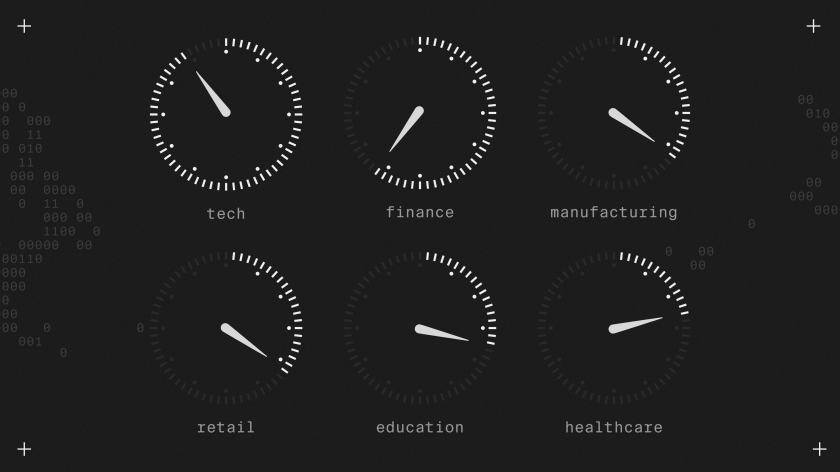
The current narrative around artificial intelligence in the workplace is largely driven by Silicon Valley. But treating the tech sector as an island misses the actual trends in technology adoption–tech is just the first industry in line. As generative AI and automation tools mature, the shifts...

How far can we push computing?

How far can we push computing?

MIT Technology Review Explains: Let our writers untangle the complex, messy world of science and technology to help you understand what’s coming next. You can read more from the series here. On the evening of December 29, 1959, at an American Physical Society meeting at Caltech, the physicist...

Anthropic remplace Git par Scion

Anthropic remplace Git par Scion

Anthropic abandonne Git pour son dépôt principal. Dans un billet publié le 13 octobre, l’éditeur décrit Scion, un gestionnaire de versions conçu en interne, et explique pourquoi Git ne suivait plus.« À mesure que notre monorepo s'agrandit, il devient de moins en moins adapté à cette conception....

Pig kidneys that were “frozen” for a year have been brought back to life

Pig kidneys that were “frozen” for a year have been brought back to life

Pig kidneys that were cooled to -150 °C and stored in a freezer for months have been successfully rewarmed and shown to work again for the first time, say scientists. They hope to replicate the findings with human organs. The kidneys—which are similar in size to human ones—were left in a glass-like...

REA confie la rétro-ingénierie à l'agent de code

REA confie la rétro-ingénierie à l'agent de code

REA (Reverse Engineer Anything) est un MCP open source de rétro-ingénierie (reverse engineering), sous licence MIT, qui donne à un agent de code (coding agent) les moyens d'inspecter un programme et d'expliquer ce qu'il fait. Il se branche sur l'agent déjà utilisé : npx rea-agents@latest setup...

The Download: faking blood and the future of batteries

The Download: faking blood and the future of batteries

This is today’s edition of The Download, our weekday newsletter that provides a daily dose of what’s going on in the world of technology. The US military’s race to make fake blood In February 2007, a US military helicopter carrying blood to a field hospital was shot down in Iraq,...